
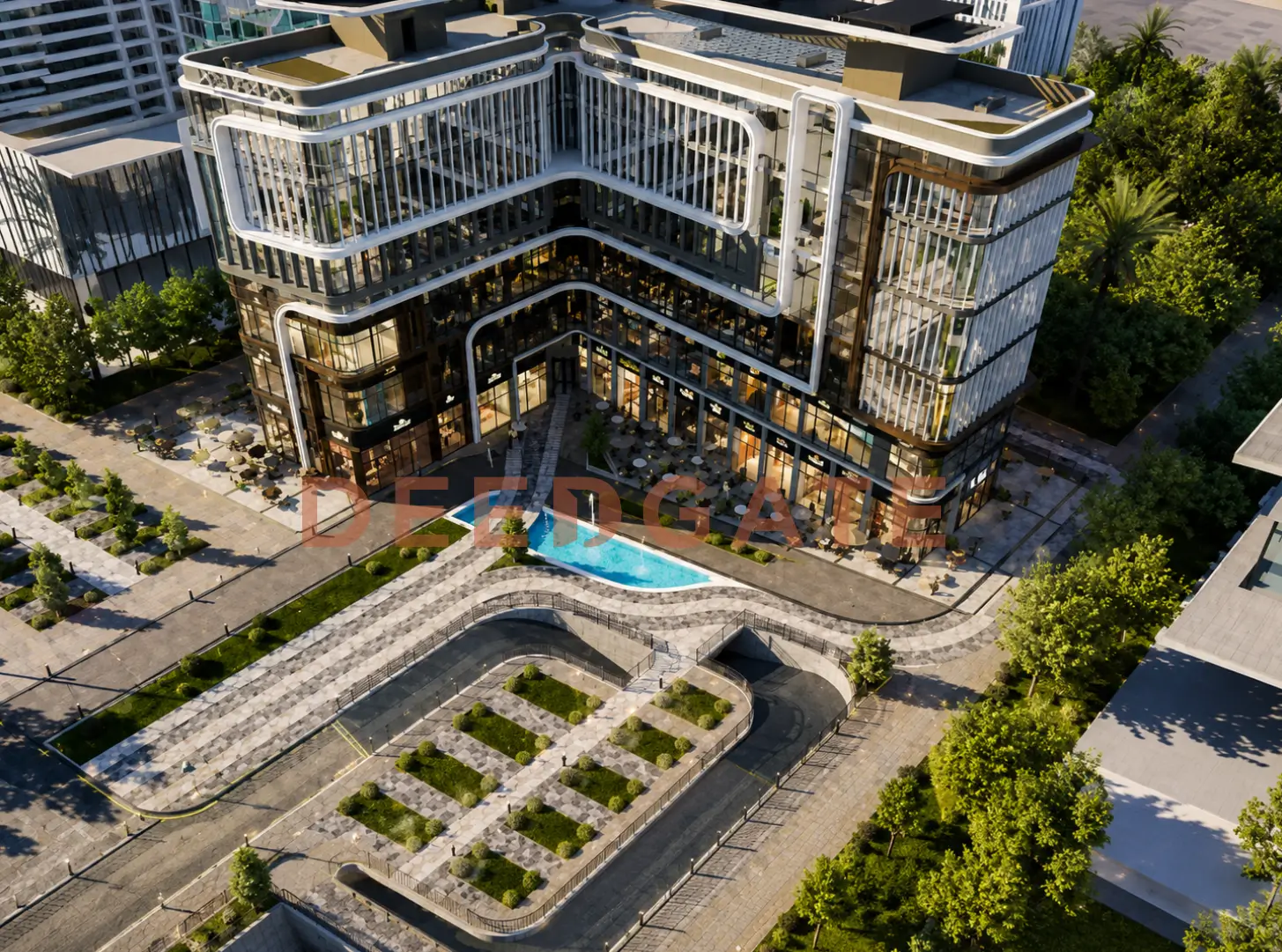
Mall The Boulevard New Capital opens the Downtown commercial market to a wider pool of individual investors, because its administrative and medical units begin at EGP 1,136,000, one of the lowest entry tickets in the current wave of New Administrative Capital malls. The project is a commercial, administrative and medical development by Deyar Misr Properties (DMP), and it sits inside the Downtown (CBD) district of the New Administrative Capital, on one of the area’s main movement axes and within minutes of Misr Mosque and the Gold Market. Deyar Misr structured the offer around four payment plans, with a reservation down payment that starts at 5% and installment terms reaching up to 8 years.
The decisive angle here is not the architecture or the floor area. It is the combination of a Downtown address with an entry price that undercuts most of the malls launching around the central district at the same time. That pairing widens the buyer base well beyond the segment that the per-meter prices in neighbouring central-district projects typically reach, which is why the development is marketed on price competitiveness rather than scale.
Where is the project located exactly?
Mall The Boulevard New Capital sits inside the Downtown (CBD) district of the New Administrative Capital, on one of the district’s primary traffic axes and within walking minutes of Misr Mosque and the Gold Market. The location falls inside the catchment of the New Capital monorail station, and it connects directly to the access routes feeding the Government District and the Financial District. That position places the mall on the daily commute line of government and finance employees, which is the footfall that decides a Downtown retail asset.
The distinction worth pausing on is that Downtown in the New Administrative Capital is not a plot of land waiting for organic growth. It is the central district designated from the first masterplan to host the headquarters of sovereign and administrative bodies. Visitor density in the mall’s radius is therefore driven by government decisions to relocate ministries, not by optional residential movement that can take years to mature. For a retail and food-and-beverage investor, footfall that is structurally guaranteed by relocated state entities is a different risk profile from footfall that depends on a residential community filling up.
The geographic entities around the project
- Government District: houses the ministry headquarters and the Cabinet, and generates a daily employee flow that lands directly in the mall’s daily-visitor count.
- Financial District: hosts the banks’ headquarters and the new stock exchange, raising demand for the administrative and office space that feeds the mall.
- Misr Mosque: the largest mosque in the New Capital and a religious and tourist destination, bringing steady visiting traffic across the week.
- Gold Market: minutes away on foot, creating commercial overlap between jewellery shoppers and the general retail audience inside the mall.
- New Capital monorail station: links Downtown to East Cairo and opens the project to shoppers from outside the New Capital without the need for a private car.
- Adjacent hospital and international school: neighbour the project and support the value of the medical and commercial units, because they create standing daily demand from patients, students’ families and medical staff.
Neighbouring projects in Downtown
The project sits next to a cluster of administrative and commercial malls in the same radius, most notably Mall Sola Business Hub and Mall Hill Cedars. A cluster of malls in one zone tends to raise total visit density rather than split it, which mirrors how CBD pockets in New Cairo and 6th of October behaved once several malls sat side by side and formed a single pull area. For The Boulevard, proximity to established neighbours works as shared gravity, and the relevant difference is its lower entry price against those same neighbours, where Sola starts in the EGP 1.4 million range.
Who is the developer Deyar Misr Properties (DMP)?
Deyar Misr Properties (DMP) is the developer of the project, an Egyptian real-estate company that launched a series of developments inside the New Administrative Capital under the “Kanyon” family before The Boulevard. The Boulevard is its fifth project in the New Capital, which matters because it means the company carries an operating record inside the same city and is not a newcomer dealing with the district for the first time. A developer that works Downtown as a series, not as a single project, has its reputation across the whole series exposed to how any one mall delivers, and that creates indirect pressure to honour handover dates.
Read More: Mall Q Clinics New Capital
The Deyar Misr project portfolio
- Mall East Kanyon, New Administrative Capital.
- Mall West Kanyon, New Administrative Capital.
- Mall Kanyon Tower, New Administrative Capital.
- Mall Grand Kanyon, New Administrative Capital.
- 8 development projects in the Maadi district.
- More than 300 residential units in Zamalek, executed and supervised by the company.
- Residential projects across New Cairo and the New Administrative Capital.
- A range of commercial and administrative complexes, plus tourism projects on the Red Sea coast.
The signal an investor takes from this portfolio is geographic and functional spread. Deyar Misr runs residential work in varied areas such as Zamalek, Maadi and New Cairo alongside a chain of malls inside Downtown itself. Because the developer operates Downtown as a chain rather than a one-off, a delay or a delivery on any single mall feeds buyer confidence in the rest of the chain, and that dynamic adds weight to the company’s commitment on delivery schedules.
Design and unit types inside the mall
Deyar Misr built the design of the mall around glass facades that pull in high natural light and wide internal corridors sized for the density expected at peak hours. The layout splits the mall into three functional levels: a retail level on the ground and first floors, a restaurant and cafe level on the second floor, and an administrative and medical level with independent entrances that keep shopping traffic separate from clinic and office visitors. Separating the entrances is a practical choice, because a patient visiting a clinic and a shopper browsing retail do not want to share the same flow.
Unit areas inside the project
| Unit type | Floor | Area (starts from) |
|---|---|---|
| Commercial unit (inner) | Ground | 18 m² |
| Commercial unit (outer) | Ground | 12 m² |
| Commercial unit | First | 16 m² |
| Restaurant / cafe unit | Second | 17 m² |
| Administrative unit | Admin level | 16 m² |
| Medical unit | Medical level | 16 m² |
These compact areas, in the 16 m² to 18 m² band, are a deliberate commercial decision by the developer. Shrinking the total ticket per unit pulls the project into a wider segment of individual investors, instead of confining the market to buyers who can afford units of 40 m² and above. The other side of that decision is that the tenant who benefits from 16 m² to 18 m² is a specific one: small brands such as kiosks, jewellery, accessories, chocolate and perfume; single-specialty clinics; and one-or-two-person consultancy offices. The unit does not suit a brand that needs an extended display, nor a clinic with more than one examination room.
Read More: Quantum Mall New Capital
Ground-floor commercial units
The ground floor is the highest-value level in any mall because it captures all of the entry traffic. The Boulevard offers its ground units in two formats: inner units from 18 m² and outer units from 12 m². The outer unit opens onto the facade and suits a cafe, an accessories shop or a kiosk branch of a known brand. The inner unit suits brands that need a full storefront inside the mall corridors. The format split lets a small operator choose between visibility on the facade and a deeper position along the internal flow.
Administrative and medical units
The administrative and medical units at the mall start from 16 m², and they form the price-attractive entry tier that begins at EGP 1,136,000. The Downtown position and the proximity to the Government and Financial Districts open the administrative units to demand from service firms such as legal accounting, consultancy, customs-clearance offices and government-relations offices, all of which need a presence close to the bodies they deal with. The medical units are supported by the adjacent hospital and international school, which means a patient base nearby and a parent base that translates into visits for paediatric, dental and dermatology practices.
Mall The Boulevard New Capital prices 2026
Prices at the mall split into four tiers by unit type and position inside the mall. The figures below are post-discount prices according to the published lists, updated for 2026, and the developer can change them at any time, so confirm the latest update before reserving.
| Unit type | Floor | Price (starts from) |
|---|---|---|
| Commercial | Ground | EGP 4,000,000 |
| Commercial (price per meter) | First | EGP 145,000, 175,000 / m² |
| Restaurants and cafes | Second | EGP 3,230,000 |
| Administrative and medical | Admin / medical level | EGP 1,136,000 |
Reading the per-meter prices
The commercial per-meter price on the first floor, between EGP 145,000 and EGP 175,000, gives an indirect read on the ground-floor rate. The ground floor commands a higher commercial price than the first, so the ground per-meter rate logically sits above the EGP 175,000 ceiling. The EGP 4 million floor for a ground unit is consistent with a unit of 18 m² to 22 m² inside that price band. Set against other Downtown malls such as Sola, which begins around EGP 1.4 million, and Hill Cedars, the EGP 1.136 million entry point for The Boulevard places it in the lowest price tier among the current Downtown malls, which is what the “unique competitive prices” line in its marketing refers to.
What are the payment plans on offer?
Deyar Misr offers four payment systems for the project, with the down payment rising from 5% to 20% and the installment term lengthening as the down payment grows, reaching 8 years in the longest plan. Each plan suits a different financial profile, and no single plan is absolutely better than the rest.
- Plan one, 5% down over 5 years: the lowest down payment, suited to an investor who wants to secure a spot with minimal liquidity and has monthly or annual cash flows that can cover a relatively higher installment over a shorter span.
- Plan two, 10% down over 6 years: a middle balance between the initial liquidity and the monthly installment.
- Plan three, 15% down over 7 years: lowers the monthly installment with a reasonable increase in the down payment, suited to a buyer seeking long comfort in the installments.
- Plan four, 20% down over 8 years: the longest term and the highest down payment, giving the lowest monthly installment and suiting a buyer investing over the long run who is not rushing an immediate return.
The practical rule for choosing a plan ties back to the purpose of the purchase. If the goal is to sell before handover, the 5% plan reduces the capital tied up and raises the return on investment at resale. If the goal is a long-term lease after handover, the 20% plan reduces the monthly installment burden and lets the rent cover the installment with a larger surplus. The 5% reservation down payment is relatively low against the Downtown norm of 10% to 15%, which adds a further entry advantage to the project.
Facilities and services on site
The declared facilities at the mall cover the standard package for a commercial, administrative and medical mall, including the following.
- A mix of retail shops for local and international brands.
- A dedicated food court on the second floor for restaurants and cafes.
- Administrative office spaces fitted with modern communications and internet systems.
- Medical clinics across multiple specialties.
- Organised car parking sized to absorb peak visiting.
- Security, guarding and camera surveillance systems running 24/7.
- Indoor seating areas and green spaces for relaxing between shopping rounds.
- Continuous maintenance and cleaning services around the clock.
- Glass facades that allow natural light and cut the mall’s reliance on artificial lighting during the day.
The element that genuinely separates mall projects is post-handover operation, the mall management. Empty shops or a weak tenant mix strip a mall of its market value even when its location is excellent. Deyar Misr’s presence as a multi-mall developer in the same city raises the likelihood of centralised operational management, instead of each mall being run in isolation from the one before it.
Investment analysis of the project
A decision to buy a unit in Mall The Boulevard New Capital is best assessed on three axes: the price entry point, the daily-visitor dynamic of the district, and the exit strategy available to the investor. Each axis rests on the facts stated above rather than on loose optimism.
The price entry point
An entry point of EGP 1,136,000 for an administrative or medical unit is among the lowest in the wave of Downtown projects announced so far. That lowers the entry barrier, but in return it raises competition from individual investors working in the same range. The implication is that a tight delivery window could see a large number of small units offered for lease at once, which may pressure the per-meter rent in the first years after handover. A buyer reading the upside should weigh this supply risk alongside the low ticket.
The daily-visitor dynamic
The daily visitor in Downtown comes from three layers: Government District employees, Financial District employees, and visitors to Misr Mosque and the Gold Market. That density is driven by government decisions and the relocation of sovereign bodies, which makes it a “compulsory” visit rather than an optional leisure visit that depends on fashion or marketing. This advantage supports the food-and-beverage units and the food-court cafes in particular, because a ministry employee needs a daily lunch, not a weekly shopping trip.
Exit strategies for the investor
An investor in a unit at the mall has three exit strategies: a sale before handover for the capital gain on the launch-to-delivery difference, a lease after handover to an operating tenant for a monthly yield, or direct operation if the investor runs a business. The small units of 16 m² to 18 m² are more liquid on resale because the buyer base for them is wider. The medical and administrative units, at their small EGP 1.1 million value, suit buy-and-rent better than flipping, because the resale margin is smaller but tenant stability, a doctor or a company, is higher than a retail tenant.
Who the project suits and who it does not
Mall The Boulevard New Capital suits the individual investor with a budget of EGP 1 million to 4 million who is entering the New Capital market for the first time and wants a low entry point in a central location. It suits the doctor or consultant looking for a small clinic or office within Downtown. It does not suit the investor seeking a large unit of 50 m² and above for a major retail brand, nor the buyer who wants a residential unit, because the project is commercial, administrative and medical only, with no residential units. This analysis is for guidance and is not an investment recommendation. Any purchase decision rests on the buyer’s personal financial position and on a direct review of the developer’s contract and reservation terms.
Frequently asked questions about the project
Where is Mall The Boulevard located in the New Capital?
Mall The Boulevard New Capital sits inside the Downtown (CBD) district of the New Administrative Capital, on a main movement axis within minutes of Misr Mosque and the Gold Market. It lies inside the New Capital monorail catchment and connects directly to the Government District and the Financial District access routes.
What is the starting price of the units?
Mall The Boulevard New Capital starts from EGP 1,136,000 for administrative and medical units, with commercial ground units from EGP 4,000,000 and second-floor restaurant units from EGP 3,230,000. Prices are post-discount and updated for 2026, and the developer can revise them, so confirm the latest list before reserving.
What are the payment plans for the units?
Mall The Boulevard New Capital offers four plans from Deyar Misr, with the down payment rising from 5% to 20% and the installment term reaching up to 8 years. A 5% down payment over 5 years is the lightest entry, while 20% down over 8 years gives the lowest monthly installment.
Read More: Smart Mall New Capital
Are the unit prices negotiable?
Mall The Boulevard New Capital lists post-discount prices from Deyar Misr, so the negotiation margin at early launches is usually limited. Flexibility tends to appear as seasonal offers, such as a cash discount, a lower down payment or a longer term, which change month to month, so check the active offers before signing the reservation form.
Is the project suitable for a first-time New Capital investor?
Mall The Boulevard New Capital is a reasonable entry point for a first-time New Capital investor for three reasons: a low price starting from EGP 1,136,000, a reservation down payment from 5% only, and a central Downtown location that reduces the “untested location” risk. A new investor should first confirm the current licensing status and the contracted delivery dates in writing.
Conclusion
Mall The Boulevard New Capital by Deyar Misr combines three traits that rarely meet in one project with the same efficiency: a Downtown location with government-driven visitor density, a low price entry point starting from EGP 1.136 million, and flexible payment plans with 5% down and installments up to 8 years. The project targets the individual investor and owners of small and medium activities, and is less suited to the needs of major brands or activities that require wide spaces. To check updated prices, full details for each unit type, or to book a viewing of the project site, get in touch through the contact form on this page.