
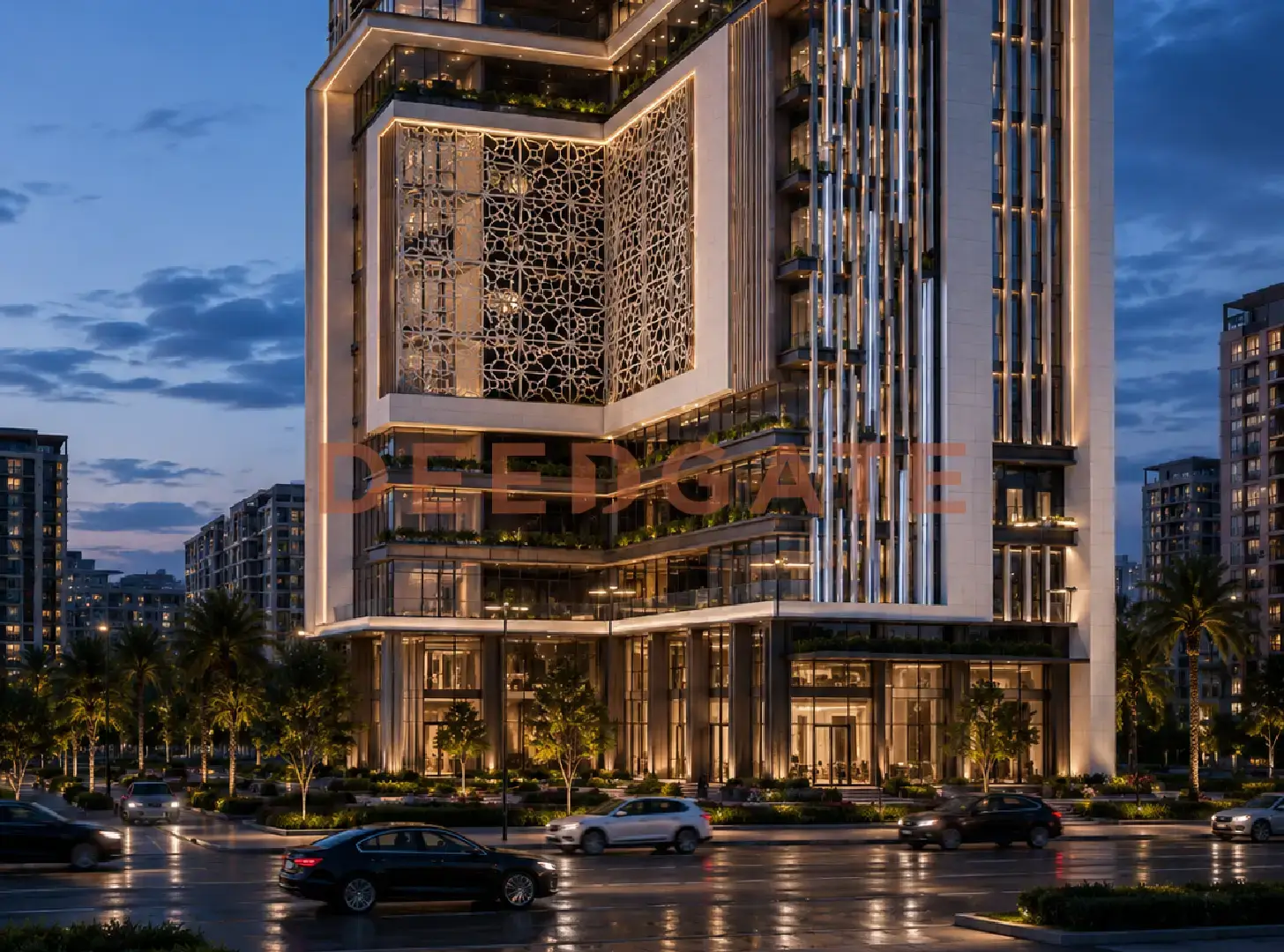
Darvell Mall New Capital is a commercial, administrative, and medical project launched by White Eagle Developments inside Downtown, the central business core of the New Administrative Capital. The decision that shapes the whole investment is who stands behind it. White Eagle is a developer tied to the EgyptAir corporate ecosystem, a backing that gives a first-time commercial buyer a wider financial and managerial umbrella than a small standalone firm usually offers. That institutional link, paired with a plot inside the Capital’s investment nucleus and a unit mix that spans shops, offices, pharmacies, and clinics, spreads demand across several activity types instead of resting the return on one.
Unit prices at Darvell Mall New Capital start from EGP 3,265,000 for administrative offices and from EGP 5,330,000 for ground-floor shops, on payment plans that open with a reservation down payment as low as 5% and stretch installments to 7 years interest-free. Handover is set within 1.6 years of contract, a short freeze on capital that lets the commercial or office activity begin sooner. The sections below cover the developer, the Downtown position, the transport network, the glass-facade architecture, every unit type with its area and price, the payment structure, the on-site services, how the project reads against its Downtown neighbors, and a grounded view of who it fits.
White Eagle Developments, the developer behind Darvell Mall
White Eagle Developments is a relatively new name in the Egyptian market, and the distinguishing line in its file is its tie to EgyptAir, the national carrier. The company chose the New Administrative Capital as its launch ground, registering its presence first with the Blue Bird residential compound inside the Capital, then moving into the commercial and administrative sector with Darvell Business Complex. Linking a developer to a large institutional entity trims part of the default risk that attaches to emerging firms, because delivery and financing sit under a broader corporate structure rather than a single owner’s balance sheet. For a buyer weighing a first commercial unit, that backing is a measurable factor, not a slogan.
Reading a developer’s track record matters most in the commercial segment, where a mall’s return depends on the building actually opening and filling with tenants. White Eagle moved through two sectors in sequence, residential with Blue Bird and then commercial and administrative with Darvell, which shows the company builds across categories rather than testing a single format. Its portfolio inside the Capital gives it a working read on what the district’s investors request, and that experience carried into the unit sizing at the project. Pairing the portfolio with the EgyptAir institutional link extends a financial and administrative umbrella wider than a small individual firm can offer, and that umbrella is the practical reassurance a buyer weighs before committing capital to a unit that delivers within 1.6 years.
Where does Darvell Mall sit inside the New Administrative Capital?
Darvell Mall New Capital sits in the Downtown district of the New Administrative Capital, the investment nucleus where the Capital’s commercial and administrative towers concentrate. The project neighbors the Green River, stands minutes from the Iconic Tower, and is reached easily from the Government District and the Ministries District, which places it in the daily path of employees and visitors to the government bodies. It also overlooks the Bin Zayed Axis, one of the Capital’s main arteries, and lies a short distance from Egypt Mosque, the Gold Market, and the monorail station, tying it into the mass-transit network and widening the pool of potential visitors.
Downtown functions as the New Administrative Capital’s central business district, the belt the city planned for its commercial towers, the Financial District, and the government-facing services. A unit inside that belt inherits the daily movement of two populations at once: the employees and visitors passing through the Government District and the Ministries District, and the shoppers the district’s malls pull from across the Capital. That dual base is what a commercial tenant pays for, because it converts a location line into rent-supporting footfall rather than an empty address waiting for the city to fill in around it.
On direct competition, the project sits close to Strip Walk Mall and Life Medical Tower, a proximity that works in favor of customer traffic rather than against it. When commercial destinations cluster, the district turns into an integrated shopping and services hub that pulls repeat footfall, so the neighboring malls feed the same visitor base Darvell draws from. The set of nearby anchors also gives the address a specific character: minutes from the Iconic Tower, the tallest tower in Africa and the visual landmark of the Capital, and fronting the Green River, the city’s central park spine that draws leisure visits. Each anchor is a fixed, named draw, and together they explain the traffic the plot inherits.
Access and the surrounding transport network
Access decides how much of a district’s population a commercial building can convert into customers, and the mall is placed to draw from several routes at once. It overlooks the Bin Zayed Axis, a main artery of the New Administrative Capital, which feeds private-car traffic straight to the frontage. It sits a short distance from the monorail station that links the Capital to Greater Cairo, so visitors arriving without a car reach it through mass transit. The Government District and the Ministries District lie within easy reach, which keeps the mall on the daily route of public-sector employees and the citizens visiting those bodies.
The same network shapes the tenant profile the units can attract. A shop on a monorail-adjacent, axis-facing plot competes for the passing trade of commuters, while an office or clinic on the upper floors benefits from clients who can reach a booked appointment by car or transit without hunting for the address. Being a short distance from the Gold Market and Egypt Mosque adds two more recurring reasons for people to be in the immediate area, and recurring presence is what turns a location into steady footfall rather than a one-time visit. For an investor pricing rent, the strength of these access lines is a direct input into occupancy and the yield a unit can hold.
Read More: Mall Linq 30 New Capital
The architecture and the glass facade
The design of Darvell Mall draws on a European architectural identity, executed by the engineer Yasser El Beltagy, and blends a skyscraper character with a glass facade carrying an Arabic touch. The glass front is not a purely aesthetic choice. It grants a clear view from inside the units toward the outside, screens part of the direct solar heat, and still passes a suitable amount of daylight and ventilation into the floors. For a commercial unit whose value rests on display and visibility, a glass facade means the shop reads more clearly from outside the building, which supports the operational value of the front units and the rent they can command.
The choice of designer carries weight in the New Administrative Capital, where the facade is part of the commercial pitch. Yasser El Beltagy is a recognized name behind a number of the Capital’s towers, and his brief for the project ties the height and presence of a skyscraper to Arabic detailing on the glass, so the building reads as part of the Downtown skyline while keeping a local identity. For the medical and administrative floors, the same glass envelope that boosts a shop’s visibility also delivers daylight into offices and clinics, which lowers the reliance on artificial lighting during working hours and gives those upper units a healthier working environment than a solid facade would allow.
Unit types and sizes in Darvell Mall New Capital
Darvell Mall offers four unit types: retail shops, administrative offices, pharmacies, and clinics, with areas set from a study of what investors most request. Shop areas start from 16 m² with an attached outdoor space, while administrative offices start from 35 m². That low floor on the minimum area opens the door to small investors and startups entering with limited capital, rather than pricing them out of a central Downtown address. The table below sets out each type against its floor, area, and price range.
Read More: Mall Midly New Capital
| Unit type | Floor | Area (m²) | Price range (EGP) |
|---|---|---|---|
| Retail shop | Ground | 16 to 46 | 5,330,000 to 14,225,000 |
| Administrative office | Upper | 35 to 45 | 3,265,000 to 4,198,000 |
| Pharmacy | Dedicated | 63 | 20,000,000 |
| Clinic | Dedicated | 37 | 3,405,000 |
Each type serves a distinct buyer. The retail shops on the ground floor capture direct street traffic and carry the highest price per meter. The administrative offices on the upper floors suit service firms and startups that rely on appointment-based clients rather than passing footfall. The pharmacy, at 63 m², is a single high-value license inside the mall, which is why its ticket reaches the top of the range. The clinic, at 37 m², gives medical practitioners a compact unit within an integrated complex that already draws visitors.
The 16 m² floor on the shops is the detail that widens the buyer base most. It lets an individual investor or a startup take a front unit with a smaller ticket than a large shop demands, then rely on the ground-floor traffic and the attached outdoor space to run the activity. The attached outdoor area on the shops extends the usable footprint beyond the enclosed meters, which is a working advantage for cafes and food outlets that seat customers outside. On the medical side, placing a pharmacy and clinics inside the same building that houses offices and retail creates a mixed-use rhythm, so a doctor’s booked patients and a shop’s walk-in customers move through the same well-served floors rather than through a single-purpose block.
Darvell Mall New Capital prices for 2026
Prices for the administrative units in Darvell Mall New Capital start from EGP 3,265,000, while the retail shops start from EGP 5,330,000, updated for 2026. The figures step up by activity, area, and floor. The 63 m² pharmacy reaches EGP 20,000,000 given the nature of the activity and its exclusivity inside the mall, while the 37 m² clinic starts from EGP 3,405,000. This spread lets a buyer pick the activity that matches the budget and the target return, from a compact office to a flagship pharmacy license.
- Administrative offices (35 to 45 m²): from EGP 3,265,000 to EGP 4,198,000, an average of about EGP 92,500 per meter.
- Retail shops (16 to 46 m²): from EGP 5,330,000 to EGP 14,225,000, an average of about EGP 311,000 per meter.
- Clinic (37 m²): from EGP 3,405,000, an average of about EGP 92,000 per meter.
- Pharmacy (63 m²): EGP 20,000,000, an average of about EGP 317,500 per meter.
The wide gap between the average office meter, around EGP 92,500, and the average shop meter, around EGP 311,000, reflects a fixed market rule rather than an arbitrary markup. Ground-floor shops generate higher customer traffic and a higher operating return, so the price per meter runs higher. Offices and clinics on the upper floors trade at a lower meter because their activity depends on booked clients, not on street footfall. Prices remain subject to change based on unit availability, so confirming the current figure before reserving is the sound step.
Payment plans and delivery
White Eagle offers more than one payment system for the units of the mall, opening with a low reservation down payment and extending the installment term over several years without interest, which lets the buyer distribute the cost. Delivery is fixed within 1.6 years of contract, a comparatively short window that shortens the period capital sits frozen before the activity starts. The available systems break down as follows.
- First system: 10% down payment, with the balance installed over 6 years.
- Second system: 7% down payment, with the balance installed over 7 years.
- Reservation down payment starts as low as 5%, depending on the unit and the system.
- Installments run interest-free on the remaining unit price.
- Delivery: within 1.6 years of contract.
The two systems sit close on paper, with the seven-year plan trading a lower 7% opening for a longer term and the six-year plan asking 10% up front for a faster payoff. Both keep the balance interest-free, so the real choice for a buyer is cash-flow timing rather than total cost. A tenant expecting the unit to start earning soon after the 1.6-year handover can carry the longer term comfortably, since rent begins covering installments while the plan still runs.
Finishing, handover, and what the buyer receives
Handover of Darvell Mall New Capital is set within 1.6 years of contract, one of the shorter timelines among the district’s malls, which limits how long a buyer’s capital stays tied up before the unit can trade. A shorter delivery window changes the investment math, because rent or an operating activity can begin sooner and the gap between paying installments and earning income narrows. Pairing that timeline with interest-free installments running up to 7 years means the buyer can still be paying the unit off while the activity has already started generating a return, rather than carrying the full cost before any income arrives.
The low reservation down payment, from as little as 5%, is the other side of that structure. It lets a small investor secure a specific unit and a specific floor position with a modest opening payment, then spread the balance across the plan. For a first-time commercial buyer, locking a front unit or a chosen office floor early matters, because the best-positioned units in a Downtown mall tend to sell first, and the reservation is what holds the position while the plan runs its course.
Facilities and services at Darvell Mall
White Eagle treated services as a core factor in the mall’s success and in keeping its units occupied, since leisure amenities pull visitors and lift the repeat-visit rate, while the technical systems serve the owners of the administrative offices. In a commercial building, the service layer is not decoration. Secured tech-run garages and electronic gates shorten the friction of arriving and parking, which matters in a high-density Downtown location. Central air conditioning and high-speed internet across the floors are the baseline an office or clinic tenant expects, and their presence widens the pool of tenants willing to lease a unit. The facilities split across operational, leisure, and security categories as listed below.
- Fully secured garages running on technological systems for parking.
- Electronic gates to organize entry and exit, panoramic elevators, and escalators.
- Cafes and restaurants serving visitors and unit owners.
- Gym halls, plus spa and jacuzzi services on the leisure side.
- High-speed internet networks and central air conditioning.
- Security and guarding around the clock with modern surveillance systems.
- ATM machines, fire-fighting systems, and emergency power generators.
The leisure side of the list does real work for the commercial units. A gym, spa, and jacuzzi, alongside cafes and restaurants, give visitors a reason to stay on site longer and to return, and longer dwell time raises the exposure of every shop on the traffic path. The operational systems do the parallel work for the upper floors: emergency generators and fire-fighting systems keep offices and clinics running through outages, and the secured garage removes the parking problem that would otherwise deter a client heading to a booked appointment in a dense district.
How Darvell Mall compares with its Downtown neighbors
Sitting beside Strip Walk Mall and Life Medical Tower places Darvell Mall New Capital inside an established Downtown cluster rather than on an untested plot. Strip Walk Mall operates as a commercial destination that already pulls shoppers into the immediate blocks, and Life Medical Tower concentrates medical activity in the same reach, so a patient visiting one clinic passes several buildings on the way. For Darvell, that neighboring demand is an advantage, because its own pharmacy and clinics tap a medical footfall the district has already built, while its shops share the retail crowd the surrounding malls draw. A standalone mall far from such neighbors would have to generate that traffic from zero.
The differentiator the project brings to that cluster is its four-way activity mix inside a single building. Where a purely retail mall depends on shoppers and a purely medical tower depends on patients, Darvell combines shops, offices, pharmacies, and clinics, so its owners lean on several demand streams at once. The developer’s tie to the EgyptAir umbrella and the compact minimum areas, shops from 16 m² and offices from 35 m², also lower the entry ticket relative to buildings that only sell large units, which widens the pool of buyers the project can serve within the same Downtown belt.
Why is Darvell Mall an investment opportunity?
The investment case for Darvell Mall rests on measurable factors rather than adjectives. The Downtown position places it in the Capital’s densest commercial nucleus. The activity mix across shops, offices, pharmacies, and clinics distributes risk over more than one demand segment instead of leaning on a single line. Handover within 1.6 years shortens the wait before the return begins. The developer’s tie to the EgyptAir umbrella adds a layer of institutional reassurance compared with a lone developer. Taken together, these are the levers a buyer can actually price, and they explain why the units draw interest from investors watching short-horizon return.
The price-per-meter gap between the floors also carries a signal for the return an owner can target. Ground-floor shops trade near EGP 311,000 per meter because they capture the highest footfall and the strongest operating income, so their entry cost is higher but their rent-generating capacity is too. Offices and clinics near EGP 92,000 per meter enter far cheaper, which suits a buyer who wants a lower ticket and is content with appointment-based, steadier demand rather than street traffic. Reading the two tiers against a buyer’s own budget and target yield is the practical way to choose the unit type, since the mall lets the same investor pick either strategy inside one address.
The New Administrative Capital sits behind the case as the broader entity. The city concentrates the relocated ministries, a Financial District built to host regional headquarters, and a transport spine of the monorail and the electric train, and Downtown receives the heaviest daily movement among its districts. As more residential phases and offices come online, the population and economic density around the district rise, which feeds demand for commercial, administrative, and medical space of the kind the project supplies. A unit bought before that density fully forms is exposed to the area’s appreciation as the surrounding projects deliver.
The project fits small investors and startups seeking a compact commercial or administrative unit in a central location, and it suits medical practitioners wanting a pharmacy or clinic inside an integrated complex. It is a weaker match for anyone after a residential unit, or a mall tucked inside a quiet residential district away from the bustle of the business zone. This read is guidance for the buyer’s own study, not an investment recommendation, and any figure should be confirmed against current availability before a decision.
Frequently asked questions about Darvell Mall New Capital
What is the price per meter at Darvell Mall New Capital?
The price per meter at Darvell Mall New Capital ranges on installment from about EGP 92,000 for administrative units and clinics to about EGP 311,000 for retail shops, and reaches roughly EGP 317,500 per meter for the pharmacy. Full units start from EGP 3,265,000 for offices and EGP 5,330,000 for shops, updated for 2026 and subject to change.
Where is Darvell Mall in the New Administrative Capital?
Darvell Mall New Capital sits in the Downtown district of the New Administrative Capital, the central commercial and administrative nucleus. It neighbors the Green River and the Iconic Tower, is reached easily from the Government District, the Ministries District, and the Bin Zayed Axis, and lies a short distance from the monorail station, the Gold Market, and Egypt Mosque.
Who is the developer of Darvell Mall?
The developer of Darvell Mall New Capital is White Eagle Developments, a company tied to EgyptAir that chose the New Administrative Capital as its launch ground. Its work includes the Blue Bird residential compound inside the Capital, before it moved into the commercial and administrative sector with the Darvell Business Complex project.
When is Darvell Mall delivered?
Darvell Mall New Capital is delivered within 1.6 years of the contract date, a comparatively short period among the district’s malls. It comes with payment systems that open with a low down payment and installments reaching up to 7 years interest-free, which allows the commercial or administrative activity to begin after a limited wait.
What unit types does Darvell Mall offer?
Darvell Mall New Capital offers four unit types: retail shops from 16 m² on the ground floor, administrative offices from 35 m² on the upper floors, a 63 m² pharmacy, and a 37 m² clinic. The mix lets a single mall serve retail, office, and medical activity, spreading demand across separate buyer segments.
Conclusion
Darvell Mall New Capital brings together a position in the heart of Downtown, an activity mix of shops, offices, pharmacies, and clinics, and a developer under an institutional umbrella linked to EgyptAir, at a starting price of EGP 3,265,000 with handover within 1.6 years. These elements make it a practical choice for small investors and for medical and commercial operators seeking a central unit with a near-term return. To check updated prices or book a viewing, reach out through the form on this page.
Read More: Quantum Mall New Capital